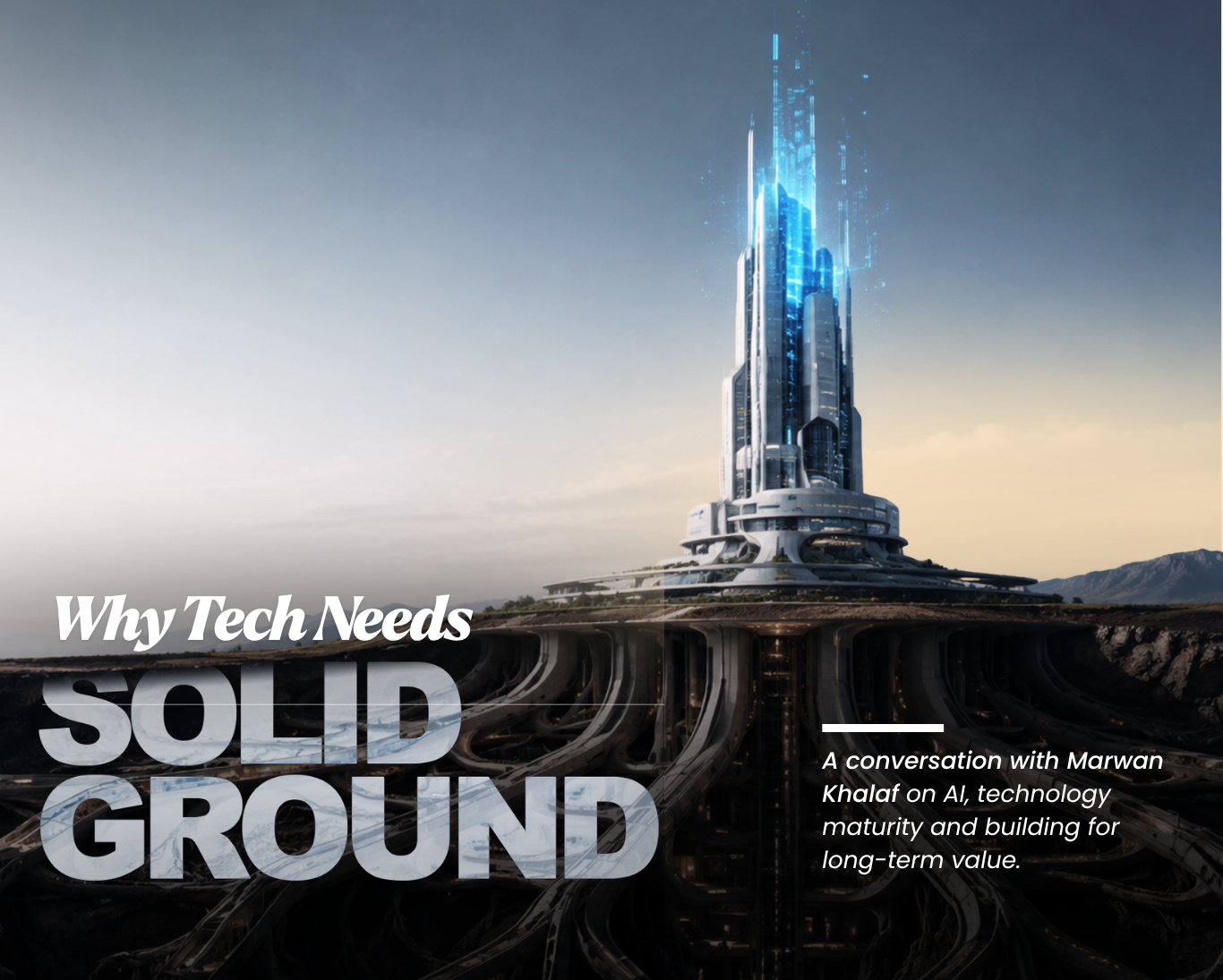

Marwan Khalaf on maturity, trusted foundations, AI readiness, customer relationships and the discipline required to turn technology into business value.
Technology changes quickly. Across a long career in IT and exposure to different markets, Marwan Khalaf has repeatedly seen organizations react first to a new trend and only later ask whether the technology is mature, necessary or suited to the problem they are trying to solve.
For him, that order matters. IT is an enabler for business, but selecting technology requires more than enthusiasm for what is new. It requires understanding the organization, the business target, the cost, the operational environment and the real impact of adoption.
“IT is the big enabler for business. But the way you select the right technology for you depends on many factors. It’s not like fashion—something you want to wear and show people that you have.”
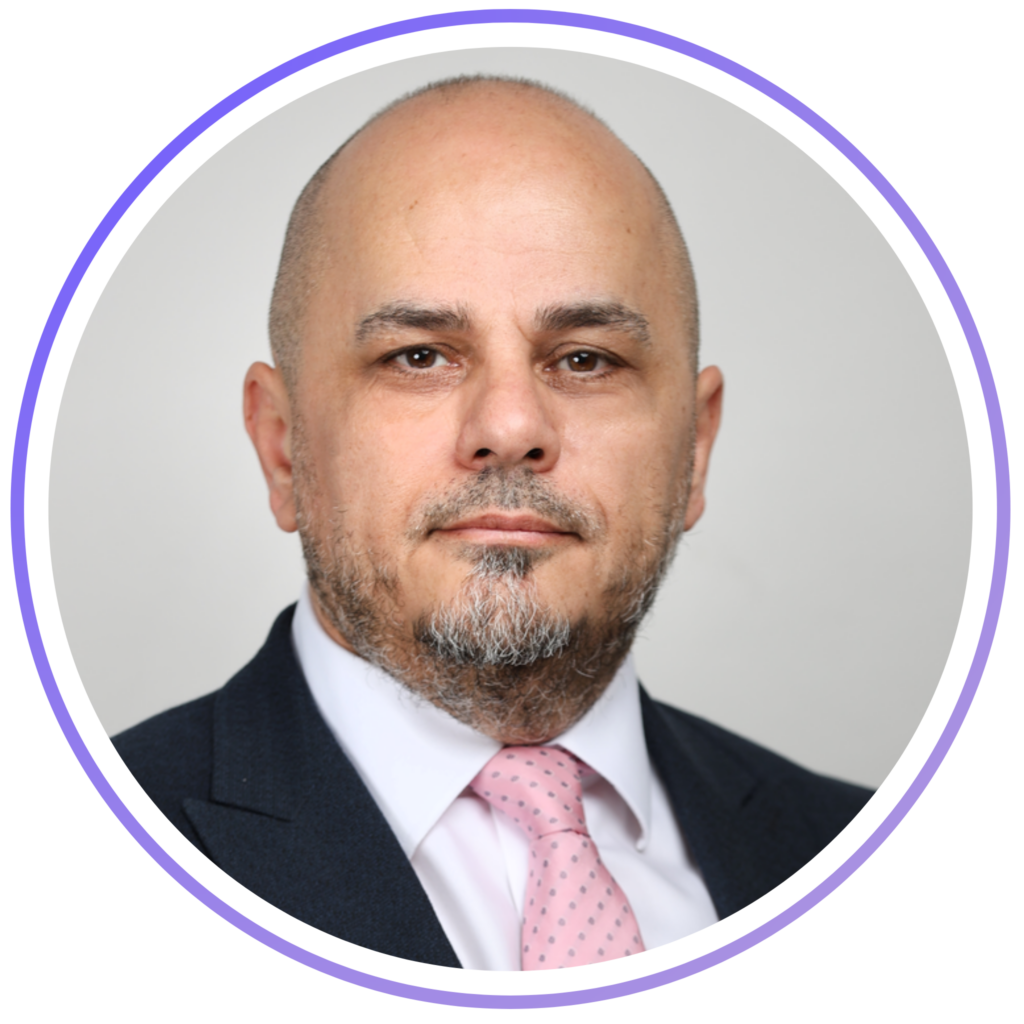
Marwan Khalaf is Group Chief Revenue Officer at ITS, bringing extensive experience across technology, infrastructure, professional services, sales leadership and business development. His career has progressed from technical consulting and infrastructure delivery into senior commercial leadership, giving him a strong combination of technical depth and business insight. Across the Middle East and Africa, he has led complex technology initiatives, customer engagements and teams, with a consistent focus on aligning technology with real business needs and long-term value.
In this article:
1- Start with maturity, not momentum
2- AI is only as useful as the information—and foundations—behind it
3- In financial technology, trust cannot be treated as an experiment
4- Before buying AI, test the need
5- Consultancy begins with listening, not selling
6- The real target is the business problem
7- Technology expertise has to communicate—and execute
8- Innovation still needs solid ground
9- Conclusion: The question is not “Do we have AI?”
01 – Start with maturity, not momentum

Marwan has seen technology trends gather momentum in markets that did not yet have enough knowledge or know-how to use them effectively. In those cases, investment in technology could consume money, effort and planning without delivering the intended result—and could even distract organizations from their real priorities.
He sees the current race towards AI through the same lens. The question is not whether AI is important. The question is whether a particular organization actually needs it, whether the use case justifies the investment, and whether the organization is ready to adopt and operate it.
That readiness includes practical constraints. Marwan points to the cost of AI infrastructure, the power it requires, the wait for some technologies to become available, the environment needed to run them and the skills required after deployment. In a fast-moving technology cycle, a six- or eight-month wait can also change the original business case: by the time the technology arrives, the need may have evolved or another approach may already be available.
02 – AI is only as useful as the information—and foundations—behind it

Marwan repeatedly brings the AI conversation back to information. He sees some of the clearest use cases in environments that need to manage very large populations, very large volumes of data or information scattered across different applications and databases.
AI did not appear in isolation. Before today’s AI tools, organizations were already building data warehouses and later data lakes to bring information together. In Marwan’s view, these foundations are what allow AI to collect, correlate and work across information that would otherwise remain fragmented.
He also connects information directly to privacy. Social platforms are one example he uses to illustrate how personal information can become commercially valuable. As the ability to analyze data becomes more powerful, the question is not only what technology can extract from information, but how that information is handled and what happens to the privacy expectations around it.
“Again, it’s all about information.”
03 – In financial technology, trust cannot be treated as an experiment
The need for maturity becomes even more important in financial services. Marwan points to ITS’s long history in the sector and to the knowledge accumulated through building and implementing financial applications across disciplines and countries. That experience, in his view, becomes part of the product itself: knowledge is transformed into how the application is designed, developed and trusted.
Core banking is not an area where novelty alone is enough. It sits at the centre of where institutions and customers place their money, so trust, stability and proven practice matter. Marwan makes the same point about ITS’s experience in Islamic financial technology, where specialized knowledge has been developed over many years.
This does not mean rejecting AI. Marwan describes a more selective approach: identify functions that create a heavy load for clients, build the business case, and use AI where it can genuinely shorten processes, reduce cost and reduce human error. The goal is not to attach an AI label to the organization. The goal is to use it where the function truly requires it.
“We did not end up saying, “We are artificial intelligence,” like a logo you put on your office. It’s about what we truly need.”
Want to know what’s best for your business? Contact the ITS team for a consultation or personalised demo.
04 – Before buying AI, test the need
One of Marwan’s most practical examples begins with a call from someone asking for a GPU.
His first response was simple:
“what do you want to do with it? The answer was process automation. But an existing solution could already perform the required function.“
For Marwan, that gap between asking for a technology and defining the problem is exactly where organizations can overspend. AI infrastructure may bring waiting time, cost, power requirements, deployment complexity and a need for specialized skills. If the objective can be achieved by something already available, the larger investment may not be justified.
His advice is to test first. He points to open-source tools and accessible ways to experiment with AI functions before committing to major infrastructure. Understanding what the technology actually does—and what the organization actually needs—should come before the purchase decision.
He compares this complexity to aviation. A plane seat may look like a single component, but behind it are many specialized contributors dealing with material, safety, space, weight, design and simulation. For Marwan, real systems integration works the same way: what looks simple at the surface may depend on many disciplines working together safely and coherently.
05 – Consultancy begins with listening, not selling

Marwan’s view of consultancy is closely tied to experience. A consulting title on its own is not enough; he sees consultancy as a practice built through years of exposure to projects, technologies, integration challenges and customer environments.
He describes ITS as an organization where many people stay for years and accumulate experience through complex system-integration work. That exposure can move a relationship beyond implementing a product. It allows the team to advise, connect IT with non-IT processes and understand the customer at a deeper operational level.
Marwan traces the same approach through his own career. He began in business continuity consultancy, built credibility through the quality of his work and documentation, and found that customers increasingly came back for advice across different areas. What began as a project relationship became a long-term relationship built on trust.
“If you reach your customer just for the sake of selling, that’s not my approach. I never do this.”
The shift is simple but important: listen first. When the relationship is strong enough, customers explain how they work, where they struggle and what they are trying to achieve. The role of the technology partner becomes less about presenting what it has to sell and more about understanding what should be solved.
Discover how ITS can help translate business needs into practical technology outcomes.
06 – The real target is the business problem
For Marwan, every requirement has a target behind it. A business may want to make more money, reduce cost, improve quality or remove friction from an existing operation. Technology becomes valuable when it helps achieve that target.
He argues that the first opportunity is often not to replace what already works, but to understand how the existing business can be improved. A well-chosen solution can reduce cost, improve output quality and create the conditions for stronger revenue without forcing the organization into unnecessary change.
Experience also helps reveal problems that customers may not articulate themselves. Across repeated engagements and different sectors, Marwan says teams can begin to recognize patterns and identify pain points that are already affecting the organization but have not yet been named. Sometimes the customer only fully sees the problem after it has been removed.
“It’s all about a pain or a problem. You can call it whatever you want, but at the end there is a target for that requirement.”
07 – Technology expertise has to communicate—and execute

Marwan places unusual weight on how people think and communicate. When he hires, he says he does not look only at knowledge. He looks at how people think, how they speak and how they interact with others. Technical knowledge that cannot be communicated has limited value to a customer relationship and limited value to the individual’s own growth.
He gives the same advice to technical leaders: if they focus only on technology and do not learn how to communicate, build relationships and help customers, they risk remaining tied to one technology while the market moves on.
In his experience, some of the strongest performers are often the people who talk less and do more. They listen to the customer, process what they have heard and execute. Rather than arguing a customer into agreement, Marwan prefers to demonstrate the result.
“We do not try to convince him otherwise. Prove it to him, and he will be convinced. That’s the way we run the business.”
08 – Innovation still needs solid ground

Looking ahead, Marwan is less interested in naming one technology than in understanding where attention is moving, how behavior is changing and what happens after a technology is introduced. Applications and hardware can begin strongly and then be overtaken by a change nobody expected. The important discipline is to keep analyzing what the technology is doing to the business and to the people using it.
He points to digital services as a simple example. Putting a service online may look like transformation, but if the process behind it is not operated and monitored correctly, a request can become stuck somewhere that nobody sees. Instead of making life easier for the user, technology can make it harder.
That is why Marwan connects innovation to operations. He describes ITS applications evolving through R&D, being designed with flexibility to embrace new technologies, and infrastructure being adapted to reduce load. He also points directly to managed services as a way to take operational responsibility away from customers so they can stay focused on their own business and innovation.
The closing principle is the same one that runs through his view of AI: organizations need to understand where they stand, how they want to move forward, how they will embrace a technology and what its real impact will be. Trends can change quickly. Investments can fail. New ideas can also emerge from unexpected places and transform an established market.
“You have to stand on something solid, build something solid with a vision, and be careful all the time with changes and trends.”
The question is not “Do we have AI?”
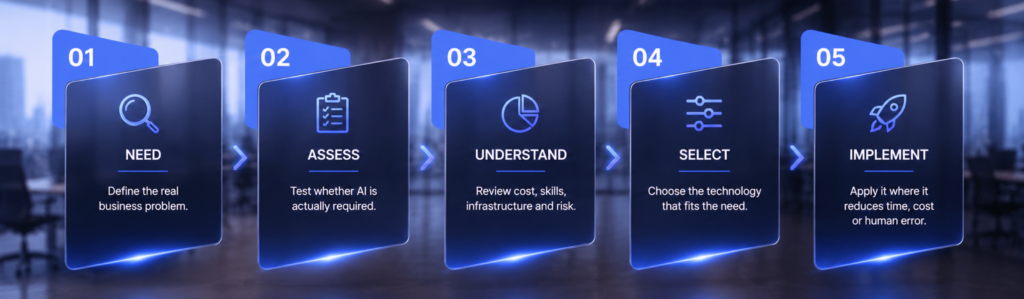
Marwan’s position is about demanding a better sequence of decisions. Understand the business. Identify the pain. Assess the maturity. Build the data and operational foundations. Test what is needed. Choose technology for a reason. Then make sure the people, processes and support behind it can deliver the result.
That is the difference between following a technology trend and using technology as a business enabler.
Whether you are looking to strengthen operations, modernise infrastructure, improve performance or plan what comes next, ITS can help you find the right approach. Explore our full range of services.