
The Marketing Story Driving ITS Forward
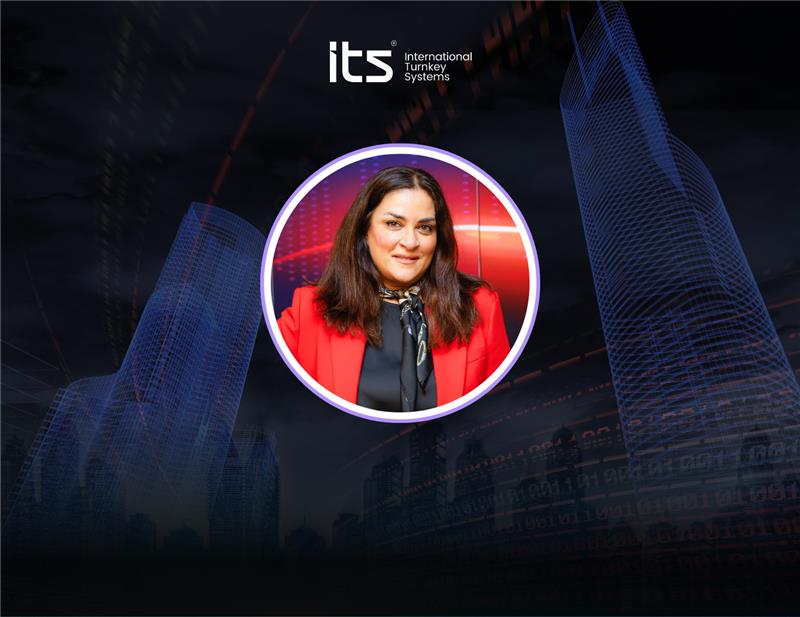
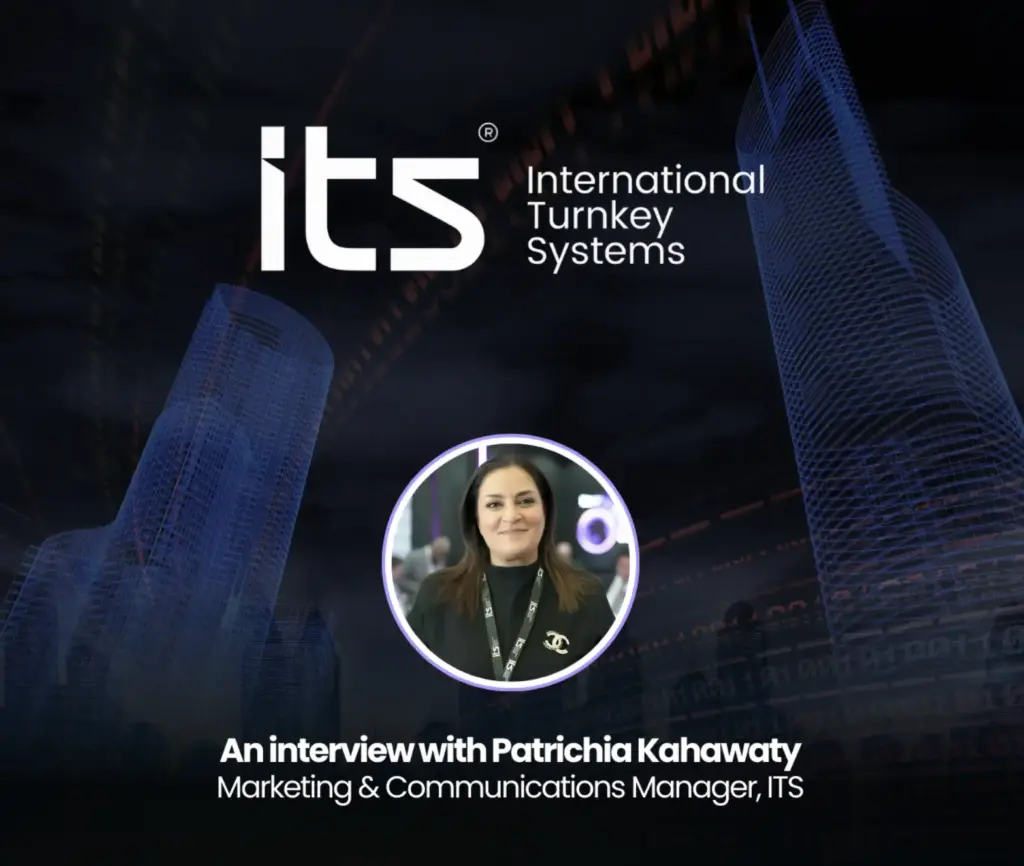
An interview with Patrichia Kahawaty, Marketing & Communications Manager, ITS
For over four decades, ITS has helped shape technology in the region. In the last five years, that story has accelerated: new markets, new audiences, and higher expectations for clarity, culture, and consistency.
Most brands that grow fast become harder to recognise. ITS chose the opposite. With a refreshed identity, a darker visual language, and one unified brand voice across Kuwait, Turkey, Egypt, the UAE, Bahrain, Central Asia, Qatar and beyond, ITS is using marketing not just to “announce” technology, but to translate it, humanise it, and make it easier to trust.
At the centre of this shift is Patrichia Kahawaty, Marketing & Communications Manager at ITS. In this conversation, she explains why the new brand is built on black, how the team designs for multiple markets and languages, why “Trust in Change” is more than a slogan, and what advice she has for the next generation of technology start-ups.
1. Why a Dark Brand in a Bright Tech World?
Q: In a time when many technology brands are moving towards light, minimal palettes, ITS chose a strong black-led identity. Why go in that direction?
Patrichia: ITS starts from the back end. Our developers are working in code, in systems, in what you often see as black screens. This is where everything begins for us.
Black, for us, reflects discipline, control, and depth in the way we work. Usually, technology starts in black and then appears to the end user as bright interfaces, white spaces and colourful dashboards. But the story always begins in the back end – and the back side is usually black.
We wanted to translate this to our customers and show that the journey is from back end to front end. What they experience as a seamless product is the result of that deep, disciplined work behind the scenes.
2. From Black to Light: The Role of Colour and the Horizon Motif

Q: The new identity moves from black into very bright colours, with a distinctive “horizon” of light wrapping a globe. What does that visual represent?
Patrichia: When we decided to uplift our identity, we thought deeply about what we wanted it to say.
The dome or globe, with a horizon of light, reflects security, speed, and continuity. These are qualities our clients should feel when they deal with us. For the end user, it adds a touch of clarity – it shows that something powerful and complex is also under control and moving forward.
It also works as a kind of mirror for our clients. That light on the horizon is our promise: that what starts in the dark, technical back end will reach them as something clear, secure, and ready to use.
3. A Website Built for Markets, Languages, and Clarity
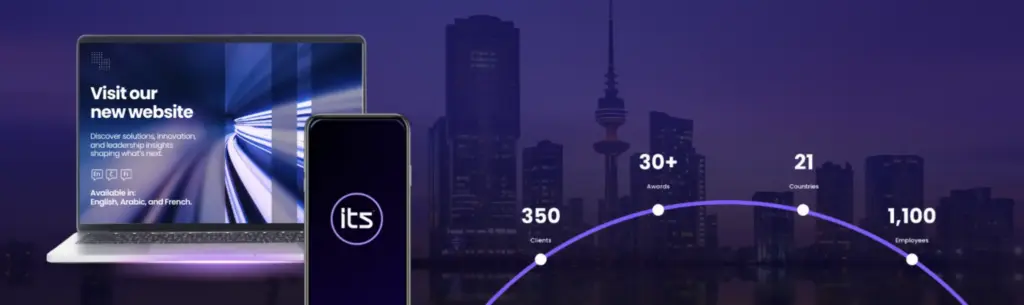
Q: The new website feels very different from the previous one. Every solution now has its own page, its own content, sometimes in multiple languages. What is the strategy behind this?
Patrichia: The aim is simple: we want to reach everybody we serve.
We are launching into new markets, including the CIS countries, so we need to speak the right languages. That means Russian, of course, but also French, Arabic, English, German and more. Our website has to reflect that reality.
We also have a large and diverse portfolio. Segmenting our solutions and giving each one its own dedicated space makes this portfolio clearer. When visitors browse the website, they should feel the range of what we have – that we are a big company with a big portfolio of products and solutions – without feeling lost.
Clarity for the visitor is the goal behind this structure.
4. “Trust in Change”: Why This Line Matters
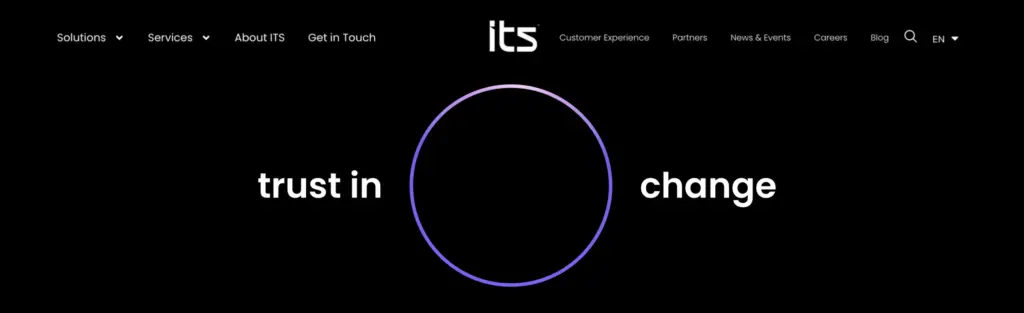
Q: The new slogan “Trust in Change” is appearing across the brand. In a world where change and technology can feel intimidating, why ask people to trust change?
Patrichia: First, we have more than 40 years’ track record in the market. People already trust us. But it is important to show that this trust continues even when we evolve – when we change our identity, uplift our future, or launch new solutions.
Trust is the key factor in our work. Our clients see us as heroes in technology. Every time we introduce something “new”, by definition we are changing something. “Trust in Change” reflects exactly that: we are asking our clients to continue trusting us through the change, not in spite of it.
So the line is not just a tagline. It is a message from our history to our future.
5. Global Events as a Core Marketing Tool
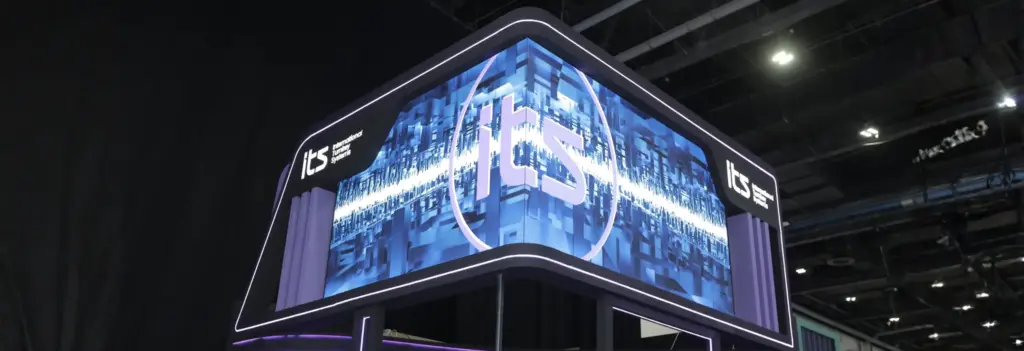
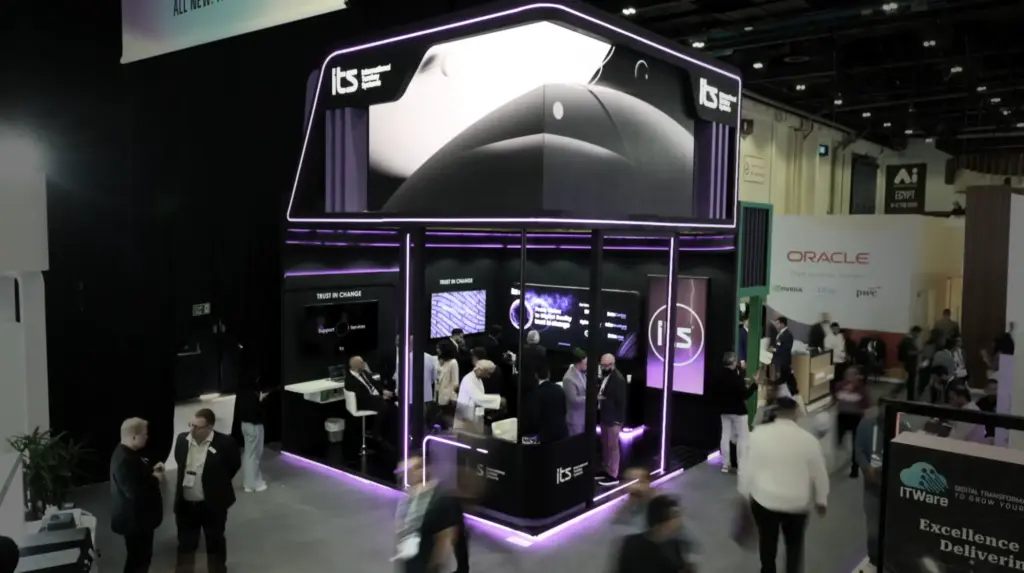
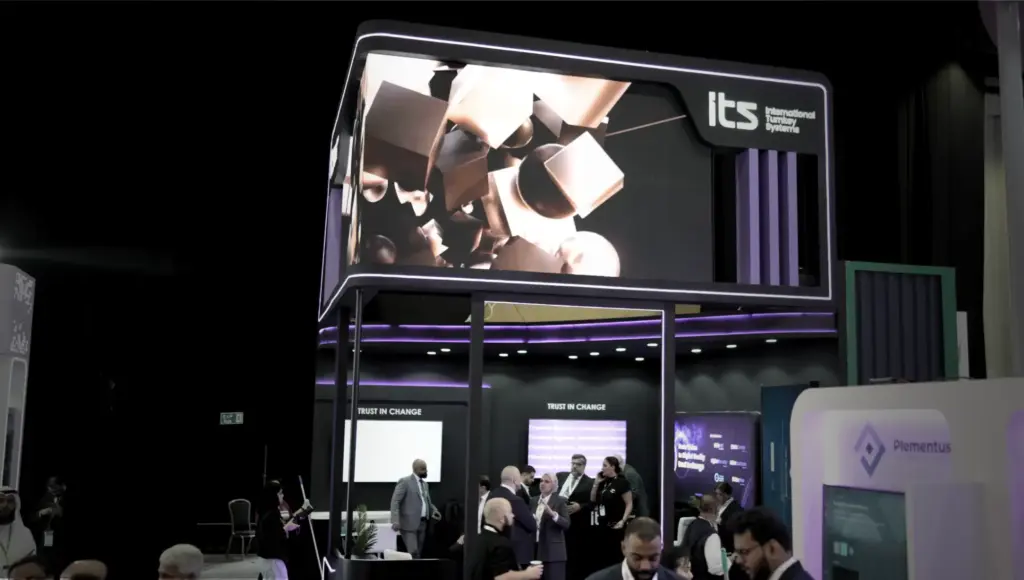
Q: ITS has been highly visible at events across the globe, including GITEX where the new identity was launched. For a technology company, why such a strong emphasis on events?
Patrichia: Events are a major tool for us to promote our portfolio. They are where we can present our solutions in a direct, tangible way.
This year, our strategy was to diversify our events globally. We started in different areas – GCC, CIS, Europe – and we are now going to America as well. We chose to launch our identity at GITEX because it is a truly international platform. People come from all over the world, so it was the right stage to introduce our new look and message.
And we are not stopping there. We will continue throughout the coming year with different events in different regions. This global presence is part of how we keep the brand alive and connected.
6. Putting People at the Front of the Brand
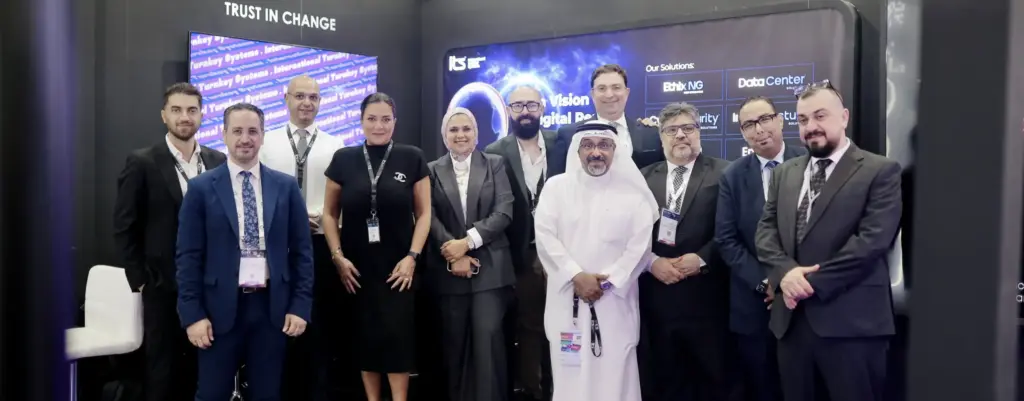
Q: In your campaigns – especially around GITEX – there is a strong focus on ITS people. On LinkedIn and other platforms, you push employees to the front, not only in formal contexts but also around cultural moments and social occasions. Why focus so much on people rather than technology?
Patrichia: Because they are behind our success.
We do sell solutions and products, but they do not come from nowhere. They come from our staff, our team, our resources. Our engineers, consultants, HR team, marketing team – they are the ones building, deploying and supporting what we offer.
We should focus on them because they are at the heart of our success story. Technology can be rigid; people bring humanity into it. That is why we highlight them so much in our communication.
Q: So, if you had to choose: are you more proud of the solutions or the people?
Patrichia: It is a tricky question. We are proud of our solutions, of course. But we are prouder of our team.
For me, the team comes first. They are our heroes. They translate everything to the end customer. They created the technology, launched it, and they are the ones who sell it and communicate it every day.
7. Marketing, Sales, and Running a Global Calendar

Q: You manage marketing activity across multiple countries – from Kuwait to the UAE, Lebanon, Egypt and more – with many priorities: promotions, events, social calendars, awards, press, ceremonies. How do you manage all this with one team and one budget?
Patrichia: Every year, we have a different strategy.
We serve a huge department in our company: the sales and pre-sales teams. At the end of each year, we sit together and align on our KPIs. Our role in marketing is to help them reach those KPIs. We know the elements that will help us sell, and we build our marketing calendar on those elements.
It is not easy. It is a challenging job. We measure our ROI after each event – whether we participate in international events like GITEX, or organise our own workshops. Each element is evaluated.
Inside any company you have heroes. I believe the marketing team is one of the heroes at ITS. We translate what sales and pre-sales need, and what the “back end” of the company is building, into activities that move the brand and the pipeline.
Q: Where do sales and marketing agree most, and where do you tend to disagree?
Patrichia: We strongly agree on spending the budget wisely.
Where we often disagree is on the bigger picture. Sales want the figures – they are responsible for targets, so they focus on numbers. Marketing wants the brand – the long-term equity and positioning. This is natural.
But we always find a compromise that is in the best interest of the company.
8. Why Launch a Blog – and Not Just Another Newsletter?
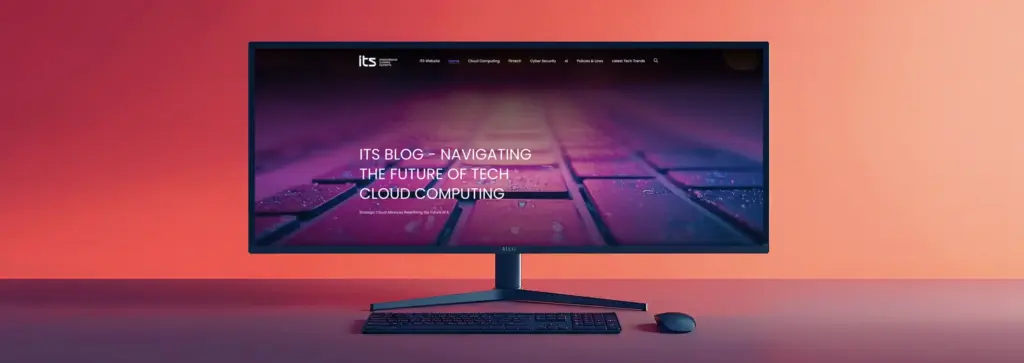
Q: This year, ITS is launching a dedicated blog. How is that different from a newsletter or the main website, and why was it important to create it?
Patrichia: We wanted a space to show our community and speak a bit differently.
On the website, the language is mostly technical and structured. With the blog, we want a different language – a more human touch. We relate to each other through stories and opinions, and the blog allows that.
A blog is usually closer to you than a website or a newsletter. It can translate opinions, invite agreement or disagreement, open discussions. You cannot do that in the same way on a corporate website.
We also want to include voices from outside ITS – experts and influencers who are relevant to our industry. ITS is not a news agency; we are an expert in the field. So this is a blog coming from practitioners with real experience. We have a lot to say, and we needed a place to say it properly.
9. Advice to Tech Start-ups in a Crowded Market

Q: Technology start-ups have grown dramatically since 2020. Many new companies are trying to push their products through marketing in a very competitive landscape. What advice would you give to someone building marketing for a tech start-up today?
Patrichia: First, you have to know what you have. Before launching anything to the community, you must be an expert in your own product.
Then, you need to choose the proper product focus, the right channel, and the right message. If you do that well, you will get the right response from the market. This is true across industries.
When I was at university, we were taught the 4Ps, 5Ps, 7Ps – the classic marketing mix for any start-up. It is still valid. But today, you have to translate those Ps into the digital world. That is where your audience is. If you can do that while staying focused, you are in a strong position.
Closing Thoughts
“Trust in Change” is more than a line on a poster for ITS. It reflects a marketing philosophy built on three things:
- Depth: starting from the back end and being honest about the complexity behind the screen.
- Clarity: structuring solutions, languages and content so buyers can understand and act.
- Humanity: putting people – inside and outside the company – at the centre of the story.
Behind the redesigned brand, the new website and the upcoming blog is a simple idea: technology only matters when it is understood, trusted and used by people. At ITS, marketing is where that connection happens.