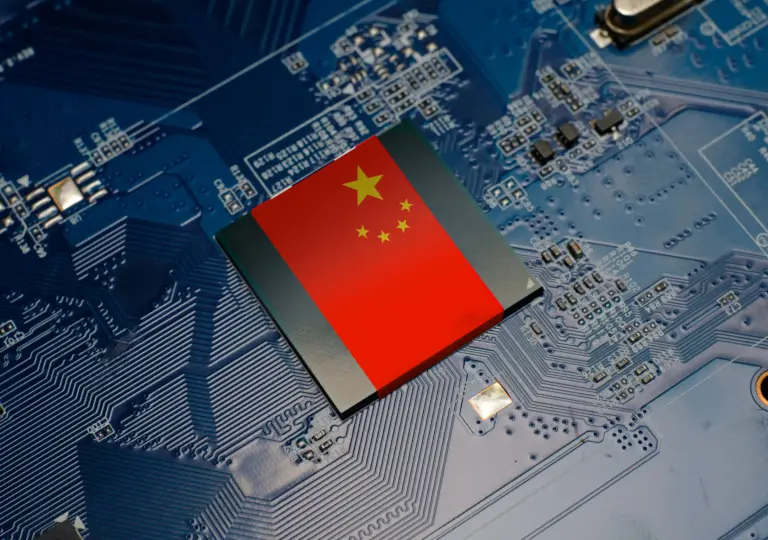

The intensifying global AI chip competition reached new heights in February 2026 as TSMC announced massive capacity expansions in Taiwan and Japan, while Samsung unveiled its 2nm AI accelerator fabs in South Korea and Texas. This escalation, driven by surging demand for edge and data center inference, underscores Asia’s dominance in semiconductor manufacturing amid U.S.-China trade tensions. Chinese firm Huawei’s surprise Pura 70-series launch with domestic 5nm chips further diversified supply chains, challenging Western dominance.
TSMC’s $100B investment targets 2nm production by Q3, optimising for hybrid Transformer-Mamba architectures like emerging 7B reasoning models. Samsung counters with SF2 (2nm) nodes featuring GAAFET transistors, promising 25% power efficiency gains for mobile NPUs. Benchmarks show Samsung’s Exynos AI chips rivaling Qualcomm’s Snapdragon X Elite in on-device reasoning, processing 200 tokens/sec on Galaxy handsets. Huawei’s Kirin 9020 integrates photonic interconnects, slashing latency for Shanghai data centers serving Southeast Asia.
In Europe, ASML’s High-NA EUV tools shipped to Intel’s Irish fab, enabling sub-1.4nm AI accelerators. Japan’s Rapidus consortium hit 2nm tape-out milestones, backed by Toyota and Sony for automotive edge AI. India’s Tata Group broke ground on Gujarat’s first 5nm fab, targeting $10B AI compute sovereignty. These moves counter U.S. CHIPS Act subsidies while addressing global chip shortages projected at 20% through 2027.
Challenges persist:
Rare earth dependencies expose supply risks, with China’s 90% NdFeB magnet control a geopolitical flashpoint. Energy demands strain grids—TSMC fabs consume 10TWh annually. Ethical manufacturing audits gain traction under EU’s Corporate Sustainability Due Diligence Directive.