
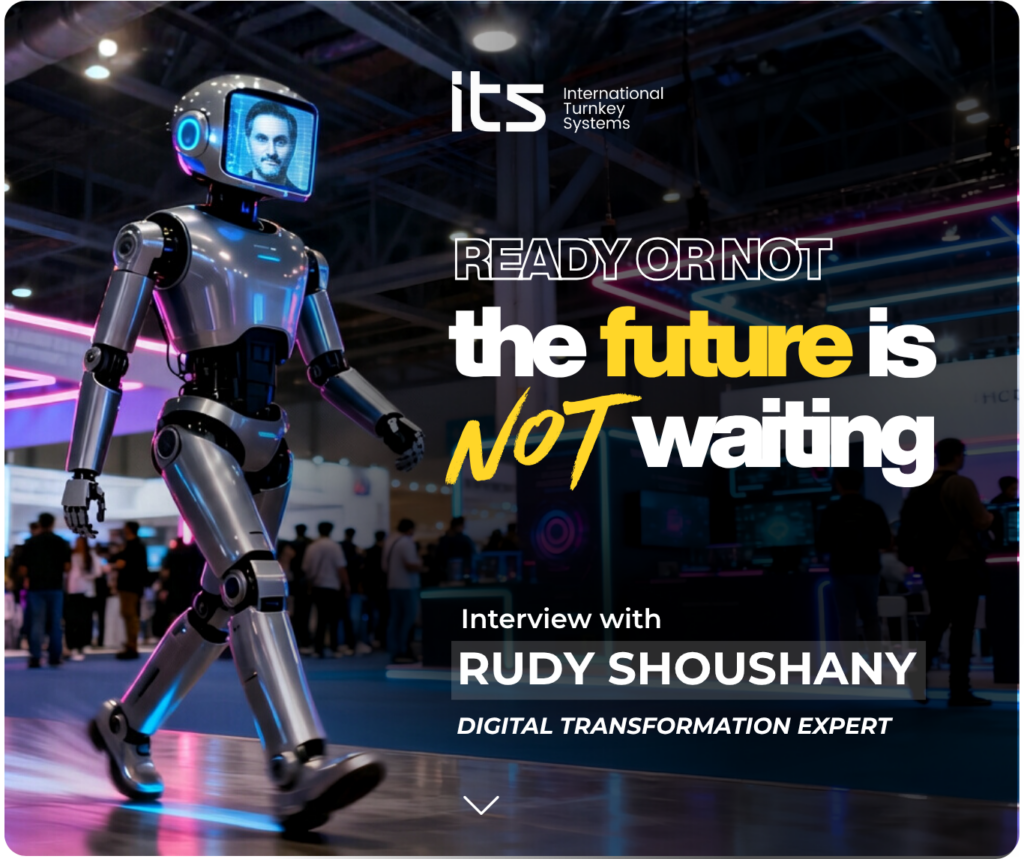
Rudy Shoushany joins the ITS Blog to discuss AI, robotics, readiness, remote work, and the mindset needed to stay relevant as technology continues to evolve.
Ready or not, the next technology wave is already taking shape.
It is not arriving as one single moment. It is not waiting for organisations to finish their internal discussions, for professionals to feel fully prepared, or for the market to separate every useful innovation from every passing trend. It is unfolding in layers: artificial intelligence, robotics, automation, data, remote work, digital infrastructure, and new expectations around how people and organisations operate.
That is why the future should not be seen as a distant destination. It is an ongoing process of evolution. Every year, every major technology gathering, every new use case, and every shift in the way people work adds another layer to the same question: how do we stay ready while the world keeps changing?
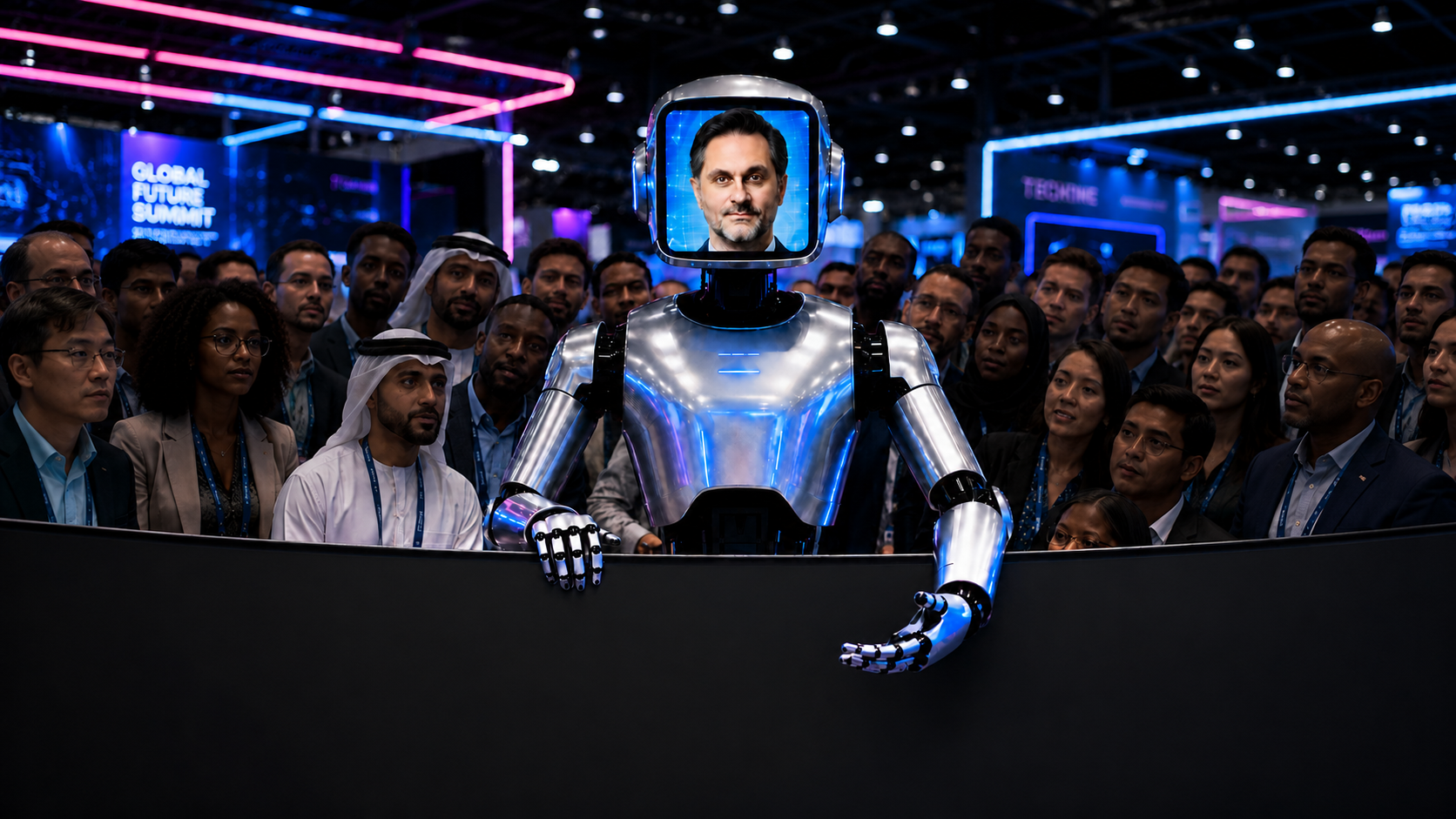
At GITEX 2025 in Dubai, International Turnkey Systems spoke with Rudy Shoushany about this exact moment. The conversation moved from AI and robotics to organisational readiness, fear, upskilling, remote work, and the mindset required to move with change.
What emerged was not simply a conversation about technology. It was a conversation about relevance.
Because in an age where technology keeps accelerating, the real question is no longer whether change is coming. It is whether people and organisations are evolving fast enough to meet it.
In this interview:
| 01 The Signals Are Already Here 02 When Technology Becomes Physical 03 Readiness Is Becoming a Personal Skill 04 Companies Cannot Wait for Certainty 05 Hype Is Easy. Value Takes Work. | 06 Before the Technology, Understand the Problem 07 The Industrial Revolution Did Not End 08 The Real Barrier May Not Be Technology 09 Remote Work Was Another Readiness Test 10 Ruling Your World Starts Where You Are |
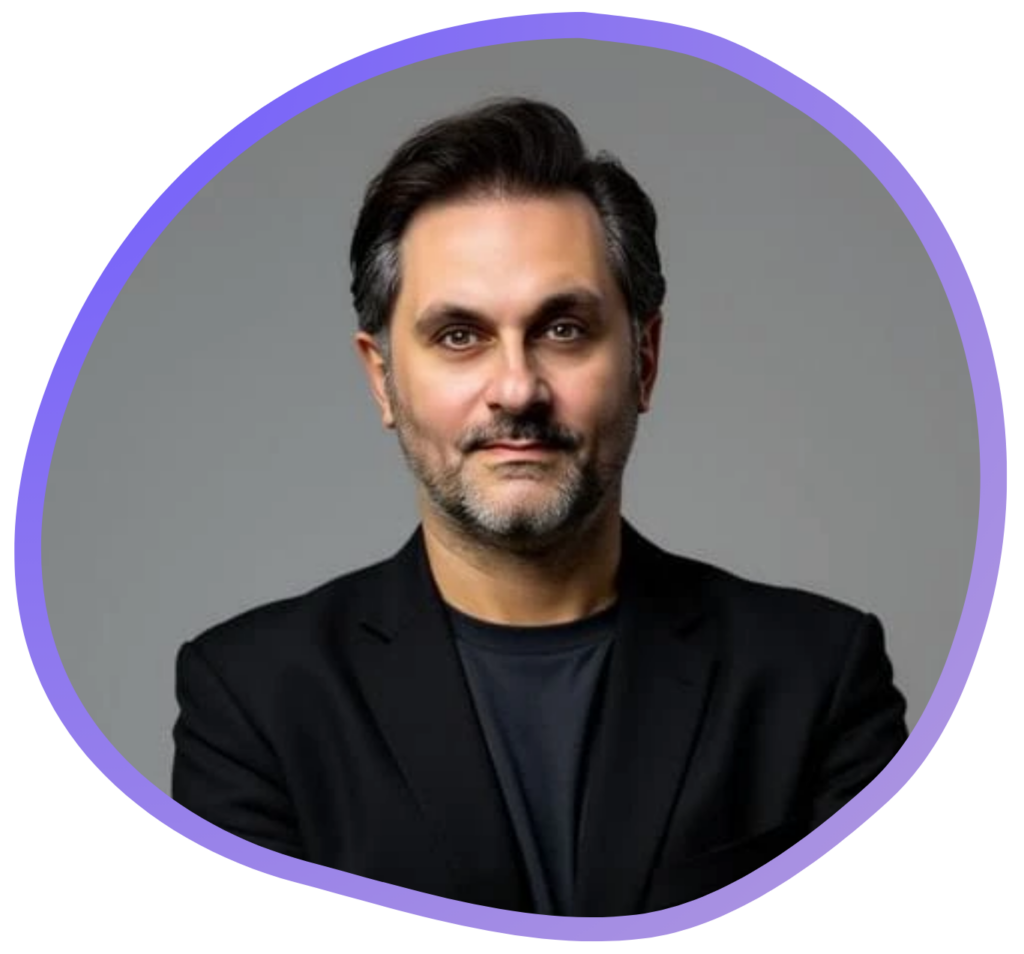
About Rudy Shoushany
Rudy Shoushany is an author, 9x award-winning keynote speaker, entrepreneur, podcaster, and emerging technology strategist with over 25 years of experience across digital transformation, AI, blockchain, cybersecurity, ICT governance, and digital strategy.
He is the founder of BCCManagement, a digital transformation consultancy, and DxTalks, a digital leaders platform focused on emerging technologies, fintech, blockchain, Web3, and the future of business in the MENA region. Through his work as a speaker, mentor, advisor, and media host, Rudy helps organisations and professionals understand how technology is reshaping industries, work, and leadership.
A member of the Forbes Technology Council, Rudy has also served as a UN ESCWA international consultant on blockchain technology in trade facilitation. In his latest book, Ruling the World in My Pajamas, he explores remote work, digital empowerment, adaptability, and the mindset needed to stay relevant in an evolving technological world.
01- The Signals Are Already Here
Every major technology event offers a glimpse into what the industry is paying attention to. Sometimes the signals are subtle. Other times, they are impossible to miss.
For Rudy Shoushany, two signals stood out clearly: artificial intelligence and robotics.
“There’s two things I really noticed big time. First one is the AI wave taking place in reality… The second one is robotics.“
He described a shift where robotics is no longer appearing as a small experimental corner of the technology conversation, but as something more visible, more accessible, and present across more use cases.
This matters because technology is no longer evolving only inside software interfaces. The conversation is expanding from digital intelligence to physical intelligence. From tools that process information to machines that can move, respond, interact, and support real-world environments.
Rudy pointed to the merge of machines, whether cars, robots, flying machines, or other forms of physical technology, powered by what he described as a great engine: artificial intelligence. That combination is important. AI is not only changing what software can do. It is beginning to shape what machines can become.
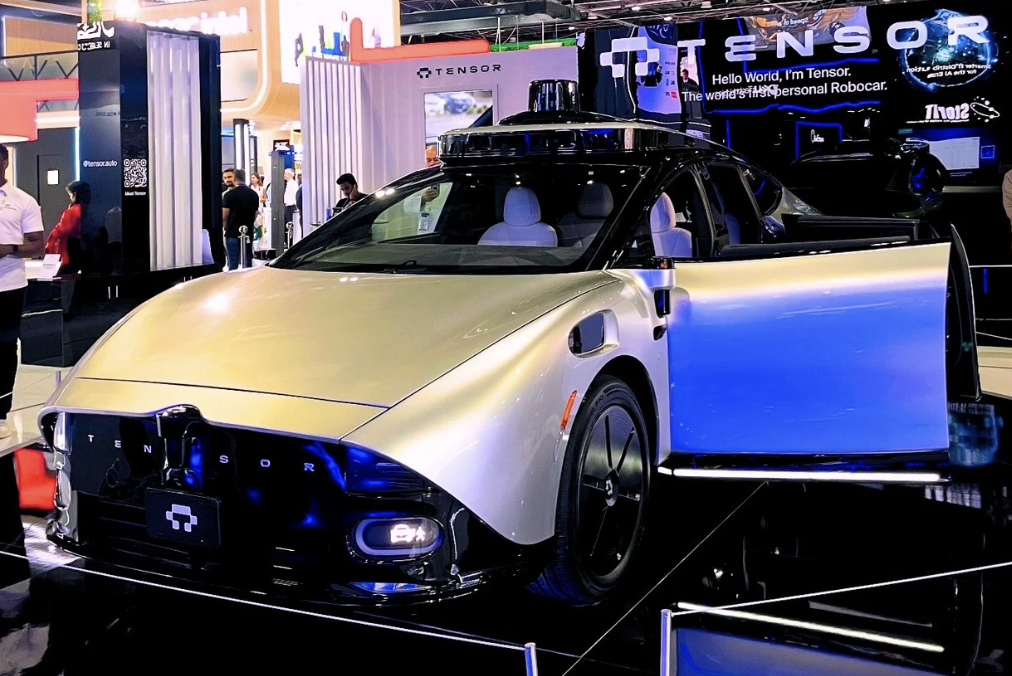 | 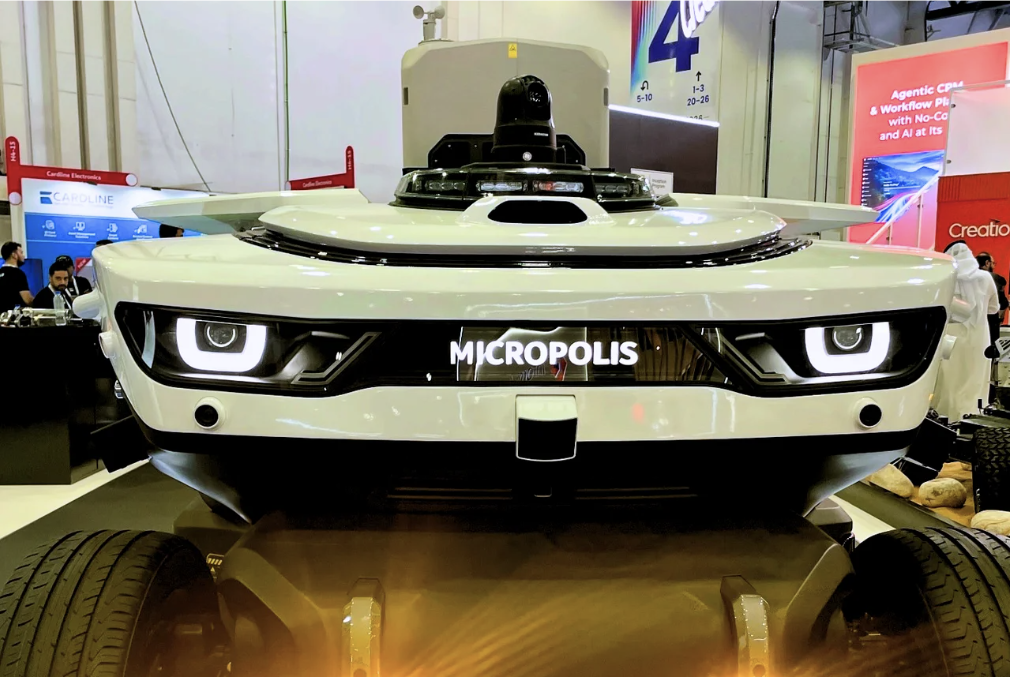 |
Images taken at GITEX 2025. Left: Self-driving Robocar by Tensor. Right: Police Patrol Robot by Dubai Micropolis.
The future is not waiting because its signals are already visible. But it is also not finished. We are still watching the early stages of a larger evolution, one where intelligence becomes more connected to infrastructure, cities, workplaces, and eventually daily life.
The question is not only what technology can do next. It is what these signals are asking us to prepare for.
02- When Technology Becomes Physical
For years, many organisations became familiar with software robots, automation tools, digital workflows, and AI-enabled systems. These technologies changed how work was processed, measured, and optimised.
Now, the conversation is shifting into something more tangible.
“Robots have been here for a while, software robots, but now we’re going to be seeing them more into physical, actionable robots“
That line captures one of the biggest changes in the technology conversation. We are moving from systems that operate behind screens to systems that can physically interact with environments. In that sense, robotics is not simply a futuristic idea. It is part of a wider continuation of automation, now entering the physical world.
This does not mean every workplace will suddenly be filled with humanoid robots. It means that the boundary between digital systems and physical operations is becoming thinner. Machines, sensors, AI engines, automation platforms, and data-driven decision-making are becoming part of the same operational ecosystem.

Rudy’s vision points towards cities and organisations where AI, robots, software, and hardware come together to serve future needs. The phrasing is important because it avoids treating robotics as a standalone trend. Robotics becomes meaningful when it connects to software, data, infrastructure, and use cases.
That is where the real evolution is happening.
The future is not waiting, but it is also not arriving fully formed. It is being assembled through these connections: AI with machines, machines with environments, environments with people, and people with new expectations around speed, convenience, safety, and service.
For businesses, the signal is clear. Technology is becoming more physical, more integrated, and more operational. The organisations that understand this early will not simply ask, ‘Should we use robots?’ They will ask, ‘Where can intelligent systems improve the way we serve, operate, and scale?’
03- Readiness Is Becoming a Personal Skill
The excitement around robotics is easy to understand. People naturally react to visible technology. A robot moving through a booth, a smart machine interacting with visitors, or a flying mobility concept will always create a moment of attention.
But the deeper question is personal.
“Get yourself educated as much as you want, but in reality, as much as you can.”
This is one of the most important ideas in the conversation. Readiness is no longer only an organisational responsibility. It is becoming a personal skill. People cannot wait for every change to become mandatory before they begin learning. They cannot wait until every tool becomes part of their job description. They cannot wait until the future becomes urgent.
This does not mean everyone needs to become an AI engineer or robotics specialist. It means that everyone needs to build enough understanding to participate in the changing conversation around work.
Rudy framed AI as the brain, connected to decision-making and data. He also described a future where AI, robotics, and eventually more advanced computing capabilities could push technology into a new phase. Whether every prediction arrives exactly on schedule is less important than the direction of the thought itself: intelligence is being embedded into more systems, more tools, and more environments.
That creates a new responsibility for professionals. Staying relevant will depend less on resisting change and more on understanding where one fits within it.
For younger professionals, this may mean building fluency in AI tools and learning how to apply them responsibly. For mid-career professionals, it may mean rethinking how experience, judgement, and domain knowledge can become stronger when supported by technology. For leaders, it means creating environments where learning is not treated as a side activity, but as part of the organisation’s survival.
The future is not waiting for people to feel ready. But readiness is not a fixed state. It is a continuous process of evolving with the tools, systems, and expectations around us.
Is your organisation ready for what comes next?
04- Companies Cannot Wait for Certainty
If individuals need to keep learning, organisations need to move even more deliberately.
The mistake many companies make is waiting for certainty. They wait for the perfect use case, the perfect platform, the perfect market signal, or the perfect moment to start. But in fast-moving technology cycles, waiting too long can create a different risk: the gap becomes wider before the organisation has even begun preparing.
“If you want to lead, you need to start preparing yourself in a testing phase.“
That does not mean rushing into every new solution. It means building the internal ability to explore, test, learn, and decide. It means asking practical questions:
- What is available?
- What could work?
- What does not fit?
- What serves the business?
- What needs to be developed internally before adoption becomes possible?
This is where upskilling becomes urgent.

Rudy described upskilling as the most important skill at this point in time for the next three or four years, because employees need empowerment to change how they work and understand how they can integrate with what is coming.
That line should matter to every organisation. Technology adoption is not only about procurement. It is about people. A company can buy platforms, deploy systems, and announce transformation initiatives, but if the teams are not ready to use, interpret, govern, question, and improve those systems, the adoption will remain shallow.
This is especially relevant in sectors such as finance, where AI, automation, data, APIs, digital identity, blockchain, cybersecurity, and compliance do not exist in isolation. They interact with legacy systems, regulatory frameworks, customer expectations, and operational realities.
Companies cannot wait for certainty because technology will keep evolving anyway. The better approach is to build a culture that can test early, assess honestly, and learn continuously.
That is the difference between reacting to the future and evolving with it.
05- Hype Is Easy. Value Takes Work.
Artificial intelligence is everywhere in today’s technology conversation. It appears in product names, marketing messages, event booths, platform descriptions, business strategies, and boardroom priorities.
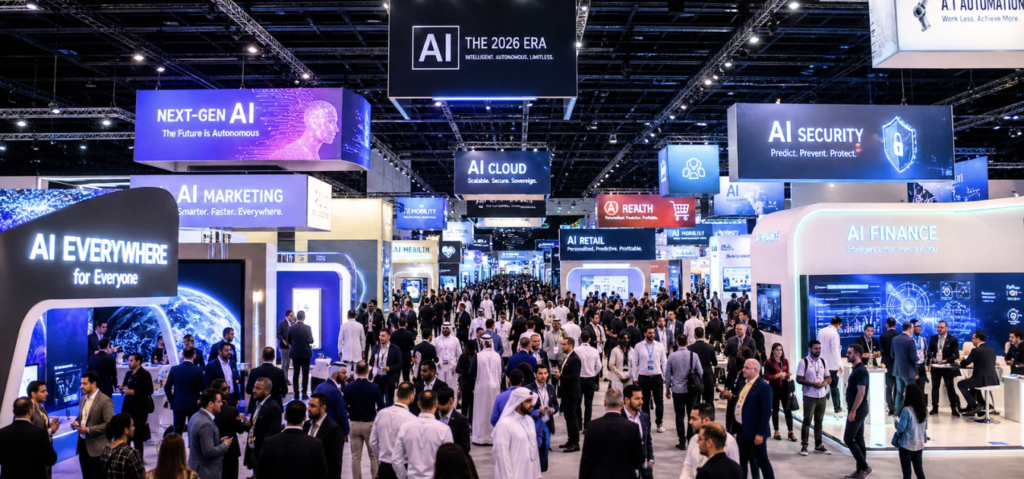
That visibility is not meaningless. Hype often signals attention, investment, and momentum. But hype alone does not create value.
“Of course, it has some hype elements… But in reality, you also have to give a good use case or we have to solve a good problem.“
That is where many AI conversations become more difficult. It is easy to say a solution includes AI. It is harder to prove that it solves a real problem, can be implemented inside a specific organisation, and can generate measurable value.
Rudy asked the right questions:
- What is the solution giving?
- Is it really working the way the organisation needs it to work?
- Is the use case achievable? Can it be implemented?
- Is the organisation ready to align with it?
These questions shift the discussion from excitement to readiness.
In the interview, Rudy also pointed to the high failure rate of AI projects, connecting that failure not only to hype but to client readiness: skills, data, governance, processes, use cases, data lakes, APIs, and the basics that need to be in place before advanced solutions can succeed.
This is one of the most important takeaways for business readers. AI value does not come from the label. It comes from the fit.
A solution may be powerful, but if the data is fragmented, the processes are unclear, the teams are not trained, the APIs are not ready, or the use case is poorly defined, the technology will struggle to deliver. In that case, the problem is not always the technology itself. It is the readiness of the environment around it.
That is why the future is not simply a race to adopt. It is a race to understand.
Hype is easy because it moves quickly. Value takes work because it requires assessment, structure, discipline, and alignment.
06- Before the Technology, Understand the Problem
This is where Rudy’s perspective connects strongly with the way ITS approaches technology conversations.
In a market where new solutions are constantly being promoted, there is a temptation to begin with the technology itself. The platform becomes the starting point. The feature becomes the headline. The trend becomes the reason for action.
“If you don’t assess, if you don’t strategize, if you don’t take a pause and think what you are doing, you’re making a wrong move.“
But effective transformation rarely starts there.
At ITS, the belief is that meaningful technology adoption begins with understanding the client’s reality: what they need, what they already have, what gaps exist, what can scale, what needs to be integrated, and what will actually support long-term value.
Rudy’s response to this assessment-first mentality was immediate: ‘That’s my bread and butter.’
That line gives this article its strategic centre.
Assessment is not a delay. It is not a conservative alternative to innovation. It is what makes innovation more likely to succeed. Without assessment, companies risk implementing technology that produces only a fraction of the intended value. With assessment, they can understand where they are, where they need to be, what gaps must be closed, and which technologies actually fit the path forward.
Rudy spoke about going back to the drawing board, identifying the target, building the strategy, and understanding where success is possible. He also connected this to different technology areas, from artificial intelligence to quantum computing and blockchain.
This is especially relevant for financial institutions and enterprise environments, where technology decisions must account for security, compliance, scalability, integration, and operational continuity. The right solution is not simply the most advanced one. It is the one that fits the organisation’s context and moves it closer to its objectives.
The future is not waiting, but that does not mean organisations should move blindly. In fact, the faster technology evolves, the more important assessment becomes.
A changing future does not remove the need for strategy. It makes strategy more necessary.

Start with the right assessment
Before adopting new technology, organisations need a clear view of their operations, infrastructure, risks, and business goals. ITS helps clients align technology decisions with real organisational needs.
07- The Industrial Revolution Did Not End
One of the most interesting parts of Rudy’s perspective is that he does not treat today’s changes as isolated from history.
The fear around AI and robotics often sounds new, but the pattern is familiar. Every major wave of technology creates anxiety around jobs, skills, relevance, and control. Machines change work. Automation changes roles. New systems replace certain tasks while creating demand for new capabilities.
“Remember, the industrial revolution did not finish. AI revolution is happening now. Robot revolution is currently already happening.“
This is where the sub-theme of evolution becomes essential.
We are not moving from one completed era into another completed era. We are living inside an ongoing industrial and digital evolution. The machines changed. The tools changed. The scale changed. The intelligence behind the systems changed. But the basic challenge remains familiar: people and organisations must adapt to new ways of creating value.
Rudy also made an important distinction around jobs. Some roles may disappear, but others will be created. Repetitive and boring tasks are especially vulnerable to automation, whether physically or virtually. His advice was not to fear the job conversation in abstract terms, but to ask a more practical question: what kind of work am I doing, and how can I move towards higher-value thinking, decision-making, and creativity?

He put it directly:
‘If it’s boring and repetitive, that’s going to be replaced. That’s where you have to upskill yourself.’
This is not a message of panic. It is a message of movement.
The future of work will not reward people only for holding onto tasks that technology can perform more efficiently. It will reward people who can interpret, decide, connect, create, manage, communicate, and improve. It will reward those who can move from repetitive execution towards judgement and value creation.
This is why readiness is not a one-time training programme. It is an evolving relationship with work itself.
08- The Real Barrier May Not Be Technology
The technology conversation often focuses on tools, platforms, models, devices, and systems. But sometimes the biggest barrier is not technical. It is psychological.
Fear slows people down. It creates resistance before understanding. It turns uncertainty into rejection. It makes change feel like a threat before it can be assessed as an opportunity.
“Fear is one of the major problems of how we actually move.“
Rudy also described fear as a blocker, and that is a crucial point for individuals and organisations.
The fear of AI, robotics, automation, or remote work is not always irrational. Change can be uncomfortable. Jobs can be disrupted. Skills can become outdated. Organisations can make wrong decisions. But fear becomes dangerous when it prevents people from learning, testing, asking, adapting, or participating in the conversation.
Rudy’s view is not that change is easy. In fact, he said, ‘I know change is not easy.’ But he also argued that people need to work on themselves, conquer their fears, and adapt to the future.
This is where the theme of ‘Ready or Not’ becomes more human.

Readiness is not only technical readiness. It is emotional readiness. It is the ability to admit that the world is changing without freezing in front of it. It is the ability to feel overwhelmed and still keep learning. It is the ability to recognise that uncertainty is part of the process, not a reason to step outside of it.
For organisations, this also matters culturally. A company that wants to evolve cannot build a culture where people are afraid to ask basic questions, experiment with new tools, or admit that they need training. Fear blocks individuals, but it can also block entire teams.
The future is not waiting for fear to disappear. It asks people to move while fear is still present.
That may be the real mindset shift.
09- Remote Work Was Another Readiness Test
Remote work may feel like a separate topic from AI and robotics, but in Rudy’s conversation, it belongs to the same larger theme.
It is another example of how the future often arrives before everyone feels ready.
“Remote work has become a reality. We cannot say no to remote work.“
The reason some organisations succeeded better than others was not luck. According to Rudy, the ones that were ready had KPIs, systems, processes, and structures in place. In other words, remote work did not only test whether employees could work from home. It tested whether organisations truly understood outputs, accountability, collaboration, and operational discipline.
Rudy made a simple but important point: ‘If I deliver X inside the office or outside the office, for me, it doesn’t matter as long as I deliver it well.’
That statement reflects a wider shift in how work is understood. Presence alone is no longer enough to define productivity. Organisations need clarity around goals, systems, procedures, outputs, communication, and trust.
This connects directly to the future of work.
AI, robotics, and automation are not the only forces changing organisations. The structure of work itself is changing. Hybrid teams, remote delivery, digital collaboration, distributed talent, and flexible operating models are all part of the same evolution.
The companies that succeed are not necessarily the ones that choose one rigid model forever. They are the ones that understand how to build systems that support performance, whether people are in the office, remote, hybrid, local, or distributed across markets.
Again, the pattern repeats: the future is not waiting, but readiness makes the difference.
Remote work did not become successful simply because the technology existed. It became successful where organisations had the mindset, processes, and systems to make it work.
10- The Industrial Revolution Did Not End
Rudy’s book, Ruling the World in My Pajamas, enters the conversation naturally because it reflects the same larger idea: change becomes meaningful when people learn how to use it in their own context.
The title is memorable, but Rudy explained that the real message is not about escaping work or turning remote work into a lifestyle slogan. It is about empowerment.
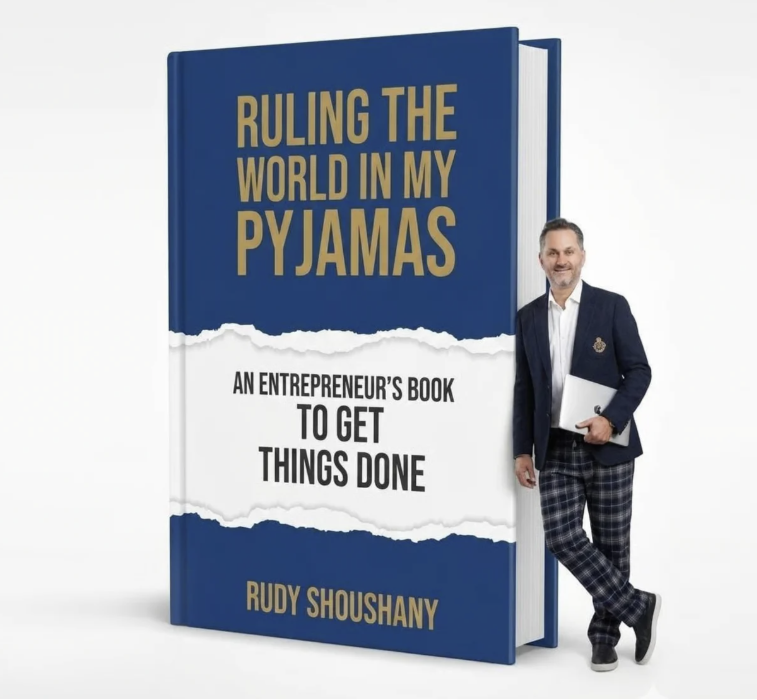
“Ruling your world whereever you are.“
That idea gives the book a wider meaning. To rule your world is not necessarily to run a global company or become a public figure. It can mean understanding your role, building your capabilities, using digital tools, expanding your reach, and adapting to the environment around you.
Rudy connected this to the power of remote work and digital access. He described being able to reach the world from behind a laptop, appear in interviews, build a personal brand, and operate across borders. For him, digital work was not only a convenience. It became a form of reach.
This is why the book should not be treated in this article as a simple promotional mention. It represents the personal side of the same transformation. Technology changes organisations, but it also changes what individuals can do from where they are.
Digital tools can empower entrepreneurs, intrapreneurs, employees, creators, consultants, and professionals inside larger organisations. The question is whether people know how to use those tools with purpose.
Rudy’s closing message brought the themes together: ‘Be adaptive, be open to change, upskill yourself, empower yourself and rule your world.’
That is a fitting conclusion because it does not reduce the future to one technology. It brings the conversation back to mindset, learning, action, and personal agency.
Ready or not, the future is not waiting. But it is also not asking everyone to become someone else overnight. It is asking people to evolve from where they are.
Conclusion: Readiness Is the New Advantage
The future is not waiting, but that does not mean the future is arriving as a finished answer.
It is still evolving. AI is still evolving. Robotics is still evolving. Work is still evolving. Organisations are still learning what to automate, what to protect, what to rethink, and what to build next. Individuals are still learning how to stay useful, informed, and confident inside a changing world.
That is why the strongest response to this moment is not panic. It is also not blind excitement.
It is readiness.
Rudy Shoushany’s perspective brings together several lessons: learn continuously, test early, upskill teams, question hype, assess before adopting, confront fear, build systems, and stay open to change.
For ITS, this aligns closely with a practical belief at the heart of meaningful transformation: technology should serve a clear purpose. Before adoption comes understanding. Before implementation comes assessment. Before value comes readiness.
In a world where change is the only constant, trusting change does not mean chasing every trend.
It means knowing how to move with it.
Move with change, backed by the right technology partner
From financial solutions and cybersecurity to datacenter hosting and managed technology services, ITS supports organisations as they modernise, scale, and prepare for what comes next.