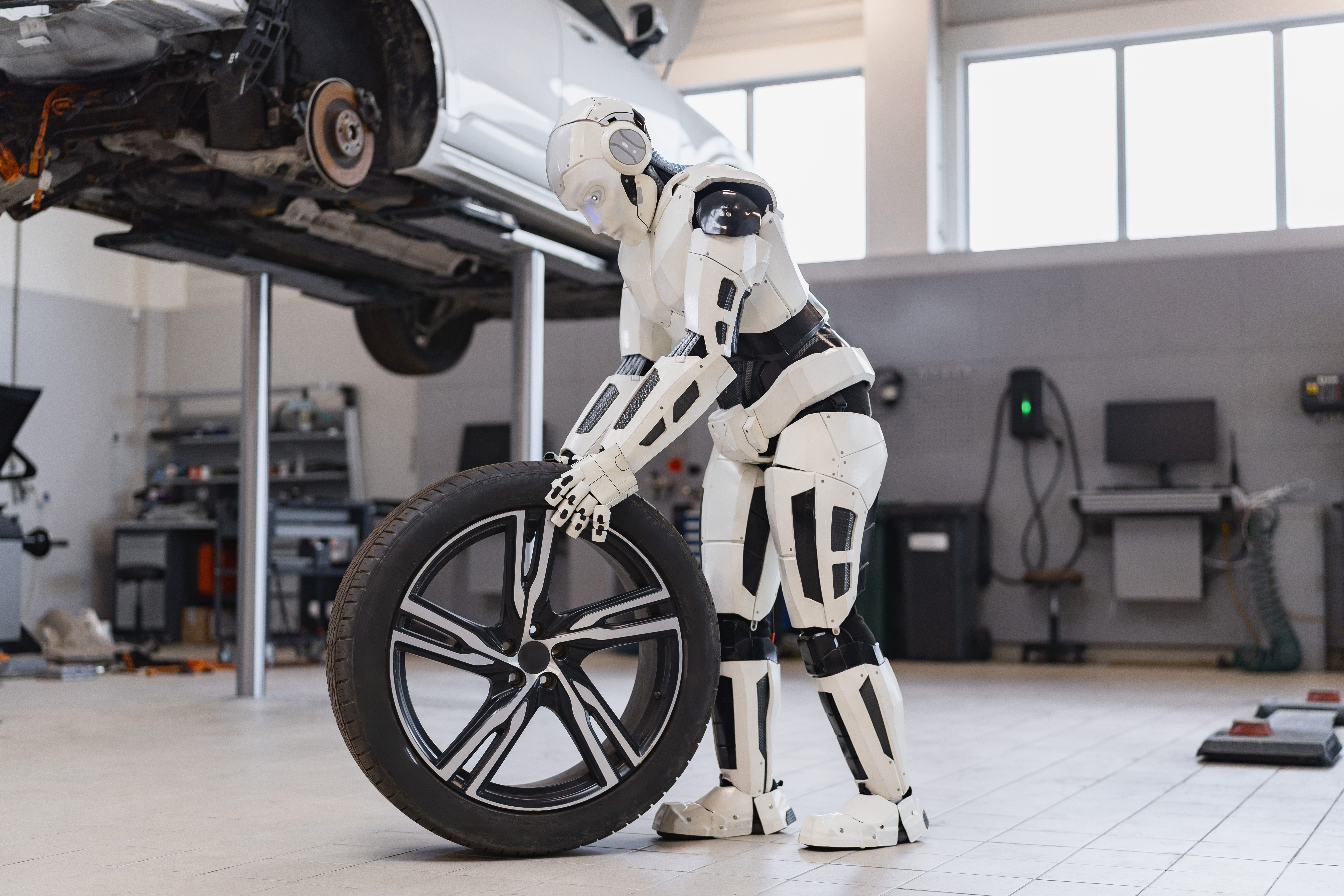

AMD agreed to acquire World Labs for $8.2 billion in September 2026, strengthening its position in spatial intelligence, robotics, and physical AI.
The acquisition
AMD agreed to acquire World Labs, founded by AI researcher Fei-Fei Li, in an all-stock transaction valued at $8.2 billion. World Labs specialises in spatial intelligence: AI systems that understand three-dimensional environments and physical relationships.
The deal expands AMD’s strategy beyond traditional data-center accelerators and into robotics, simulation, autonomous machines, and physical AI.
What physical AI means
Physical AI systems must understand more than language or images. They need to reason about:
– Space.
– Motion.
– Objects.
– Distance.
– Force.
– Physical constraints.
– Environmental change.
These capabilities are essential for robots operating in factories, warehouses, hospitals, construction sites, and transportation environments.
Why AMD is interested
World Labs’ research could influence AMD’s future hardware and software roadmaps. Physical AI requires high-performance computing for training, but it also requires efficient inference at the edge, where robots and machines must respond quickly.
AMD could benefit from growth in:
– Robotics computing.
– Simulation platforms.
– Digital twins.
– Autonomous systems.
– Edge AI.
– Industrial automation.
The acquisition also gives AMD a stronger way to compete with Nvidia in emerging AI workloads.
Industry implications
The deal indicates that the AI market is expanding from digital assistants to systems that interact with the physical world. It also suggests that chip companies are acquiring research and software capabilities to anticipate future demand.
The next major competition may involve complete platforms combining:
– Models.
– Chips.
– Sensors.
– Simulation.
– Robotics software.
– Cloud infrastructure.
The acquisition makes physical intelligence one of the most important technology directions to watch after the current language-model wave.